



Key takeaways
- Choose a documentary narrator voice over for tone and pacing first, then for language and dialect. Those decisions are the hardest to reverse once filming starts.
- At Sedrah Stories, Research and Scripting, the second and third stages of our five-stage process, define what a narrator needs to sound like before anyone auditions.
- Not every documentary needs narration. Observational formats, such as a film about a motorcycle riding community, can carry a story through interviews and ambient sound alone.
- A short audition against a locked scene, not a cold read of the script, is the only reliable test of whether a narrator fits a film.
- Arabic and English narration for the same institutional film usually need separate casting, not one voice recorded twice.
The right documentary narrator voice over is the one whose tone, pacing and language serve the subject, not the one with the most impressive showreel. Start with the weight of the occasion. Decide the register the film needs. Then settle the language and dialect, and test candidates against real footage before you commit. At Sedrah Stories, we treat narration as a creative decision that begins in Discovery and is shaped by Research and Scripting, not something added at the end of post-production. This guide covers each decision in order, with the questions institutional and cultural clients should settle before casting begins.
What a Documentary Narrator Voice Over Actually Does
A narrator is the film's guiding intelligence. They are not a character in the story. They hold the thread between scenes, supply the context the images cannot, and set the emotional temperature of the whole piece. A strong narrator can make archival photographs feel present and a quiet setting feel charged with history. A poor one can flatten a carefully researched film into something that sounds like an annual report.
The role is narrower than many clients expect. A narrator should not repeat what the frame already shows. Their job is to add what the viewer cannot see: the date, the significance, the link between one generation and the next.
Voice-over narration vs an on-camera presenter
An on-camera presenter is part of the picture. Their face, wardrobe and setting all carry meaning. The audience follows them, so the film becomes partly about their journey through the subject. That works well for exploratory formats, where a recognized figure visits sites and meets people.
Voice-over narration stays out of the frame. The subject holds the screen and the voice stays in service to it. For heritage and national films, this is often the more respectful choice, because the land, the craft or the people remain the focus. Narration is also more flexible in the edit. You can rewrite a line and re-record it without reshooting a scene.
When a film needs no narrator at all
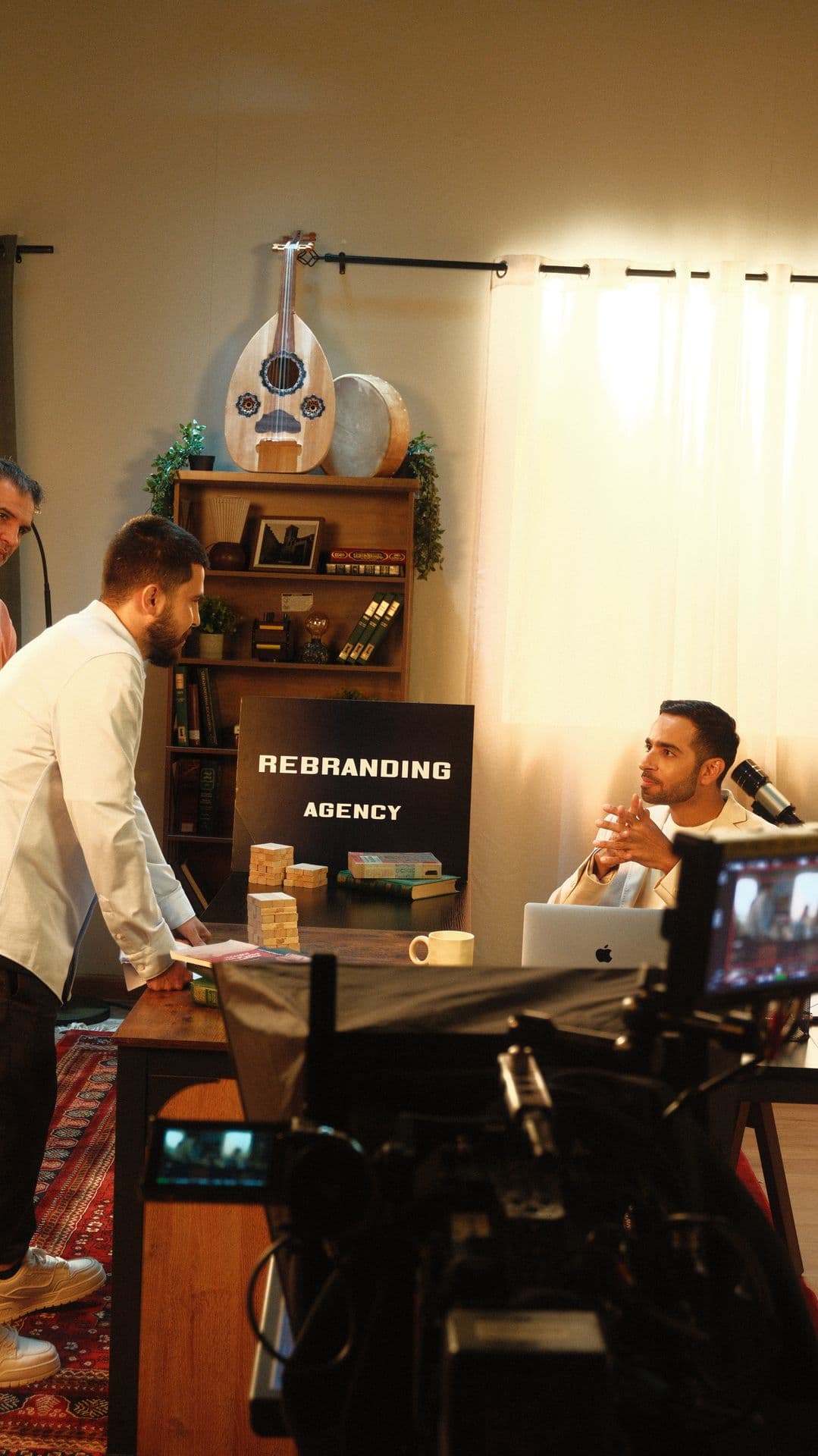
Some stories are best told by the people living them. An observational film built on interviews, natural dialogue and ambient sound can feel more honest without a narrator steering the viewer. A subject like a documentary shoot following a motorcycle riding community shows the shape of this kind of film: the workshop, the rides through the city and the desert, and the conversations in between. Material like that has its own rhythm and its own voices.
The same principle applies in heritage work. UNESCO's criteria for the Representative List require evidence of free and informed consent from the communities concerned, which can take the form of letters or video. When community members speak for their own tradition on camera, a professional narrator may be needed only lightly, or not at all.
Professional Voice-Over Artist or a Recognised Local Voice?
Once you know the film needs narration, the next choice is who delivers it. Broadly, there are two paths: a trained voice-over artist, or a voice the audience already knows, such as a public figure, broadcaster or institutional leader.
- Delivery control: Trained voice-over artist: High: can adjust pace, emphasis and energy on direction; Recognised local voice: Varies: may need more coaching and more takes
- Audience connection: Trained voice-over artist: Neutral: the voice serves the film; Recognised local voice: Immediate: recognition adds authority and warmth
- Scheduling: Trained voice-over artist: Usually flexible, studio-based; Recognised local voice: Often limited by public duties
- Re-recording for edit changes: Trained voice-over artist: Straightforward; Recognised local voice: Can be difficult to arrange
- Best suited to: Trained voice-over artist: Long-format series, knowledge content, multi-episode work; Recognised local voice: Commemorations, tributes, single landmark films
- Risk: Trained voice-over artist: Can sound generic if poorly cast; Recognised local voice: Personal profile may overshadow the subject
What a trained voice-over artist brings
A professional brings technique. They can hold a consistent tone across hours of material, hit timing marks against picture, and give three readings of a line with different weight on each. For research-heavy films with dense historical content, that control matters. Correct pronunciation of names, places and tribal lineages has to be exact, and a trained voice will take direction on it quickly.
Rates in the UAE market scale with scope, language and experience. Basic single-language work can start from around AED 300. Commercial projects generally run from $150 to $1,000 or more, while corporate and e-learning narration tends to sit between $200 and $700. Khaleeji and Emirati voices, along with award-winning artists, usually command rates above these starting points. Budget for the voice the film needs rather than the cheapest available.
What a recognised local voice brings
A known voice brings authority that cannot be manufactured. When a respected figure narrates a national tribute, the audience hears the film as a statement from the community itself. The trade-off is practical. Availability is limited, and studio technique may need support. The production also has to make sure the person's profile serves the subject rather than competing with it.
Mixing both across an episode series
A series gives more options than a single film. One approach is a trained narrator carrying the through-line across every episode, with recognized voices introducing individual chapters or delivering a closing reflection. Another is a recognized voice for a flagship opening episode and a professional for the rest. The right structure depends partly on format, which is why it helps to weigh a short-film series vs a feature documentary before casting anyone.
Matching Tone to the Occasion
Tone is the first decision because everything else follows from it. The same script read with ceremonial gravity or conversational ease will produce two different films. The weight of the subject should set the register.
Narration for national tributes and commemorations
National occasions call for restraint. The narration should feel measured and unhurried, with space left for silence and music. Over-performance is the common failure. A voice that pushes emotion onto the viewer works against images that already carry it.
The Pledge Day, our tribute to the country for Union Pledge Day on 18 July, was shot 100% on film with no digitalization. Its research notes and references sit beside the frames they informed. A film made with that level of care in the image needs a voice of matching care: one that respects the occasion and lets the pictures breathe. The same applies to campaign work such as the two Eid Al Etihad 54 films we carried out with the Eid Al Etihad team for National Day, where the narration has to speak for a national moment without speaking over it.
Narration for lighter, observational subjects
Cultural series about crafts, food, sport or community life can carry a warmer, more curious tone. The narrator can sound like a knowledgeable companion rather than an official voice. Pacing can be quicker, sentences shorter, and there is room for gentle humor if the subject allows it. The risk runs the other way here: a narrator who is too solemn makes a living tradition feel like a museum exhibit.
Language and Dialect Choices for UAE Institutional Films
In the UAE, language is a statement of identity as much as a practical choice. Casting decisions here should be made early, with the client's audience and distribution plan clearly defined.
Modern Standard Arabic or Gulf dialect
Modern Standard Arabic carries formality and reach. It reads as official, it travels across the Arab world, and it suits national commemorations, archival history and content intended for regional or international distribution.
Gulf dialect, and Emirati dialect in particular, carries intimacy and belonging. It suits films about local heritage, family memory and community traditions, where the audience should feel spoken to by one of their own. Some films use both: Modern Standard Arabic for the narrated frame, with interviewees speaking in their natural dialect. That contrast can be powerful, provided it is planned in the script rather than discovered in the edit.
Recording separate English and Arabic versions
Bilingual delivery is standard for heritage work in the Gulf. Recent UNESCO nomination files involving the UAE, including the joint Harees nomination, record community statements and consent footage in Arabic/English. For nomination films specifically, length is tight too. Recent UAE-linked submissions such as Al Sadu, Al Talli and the men's outer abaya show films capped at around 9 to 10 minutes, so every line of narration has to earn its place in both languages.
A single bilingual narrator recording both versions rarely gives the best result. Arabic and English have different rhythms and different sentence structures, and they carry authority in different ways. A voice that sounds commanding in one language can sound stiff in the other. Casting each version separately, against the same picture, usually produces two films that each feel native to their audience.
How the Five-Stage Process Shapes the Narration
Every film we make goes through the same five stages: Discovery, Research, Scripting, Production and Post-production. Narration touches all of them, but it is decided in the first three.
Why narration is cast before the edit, not after
If the narrator is chosen after the edit is locked, the voice has to fit a structure built without it. Pauses fall in the wrong places. Lines are written to a length no one has tested aloud. The tone of the picture and the tone of the voice pull in different directions.
Casting earlier lets the edit be built around the voice. Scene lengths can allow for the narrator's natural pace, the script can be refined after a test read, and the director can shoot with the register of the narration in mind. In Discovery we establish the occasion, the audience and the purpose of the film, and those three facts already narrow the field of suitable voices considerably.
Research notes that inform the narrator's brief
Research-driven scripting means the narrator's brief comes from evidence, not guesswork. Our research stage produces the material a narrator needs to perform with authority:
- A pronunciation guide for names, places, tribes and historical terms, checked with subject experts.
- Context notes on the period, the people and the significance of each sequence.
- A tone map that marks where the film should feel ceremonial, intimate, reflective or forward-looking.
- Sensitivity notes on subjects that need particular care in delivery.
A narrator who understands why a line matters will read it differently from one who has only been told how to say it.
Auditioning a Narrator Before You Commit
Showreels show range. They do not show fit. The only way to know whether a voice belongs in your film is to hear it against your film.
Test against a locked scene, not a cold read
Choose one or two scenes that represent the film's emotional range: perhaps an opening sequence and a turning point. Lock the picture and the music. Then have each shortlisted narrator record the scripted lines against that footage. Hearing a voice under real images, with real timing, reveals more in a few minutes than hours of reading from a page.
What to listen for in the playback
- Pacing against picture. Does the voice leave room for the image, or rush to fill every second?
- Clarity of names and terms. Are historical and cultural references pronounced with confidence and accuracy?
- Emotional register. Does the delivery match the weight of the scene, without underplaying or overplaying it?
- Consistency across takes. Can the narrator hold the same tone when asked to repeat a line?
- Response to direction. How quickly does the reading change when you ask for more restraint or more warmth?
Red flags that show up only on camera
Some problems are invisible in a booth. A voice with a strong commercial cadence can make a heritage film sound like an advertisement. A narrator whose energy rises at the end of every sentence can make solemn footage feel restless. A delivery that sounds rich in isolation can clash with the texture of film grain or the warmth of archival audio. These issues only appear in playback against picture, which is exactly why the test matters.
What to Prepare Before You Brief a Narrator
Narrator casting goes faster and lands better when the groundwork is already in place. The same preparation that helps you understand how to brief a documentary production company will help here.
Documents and references to have ready
- The purpose and occasion of the film, including any fixed dates or ceremonies.
- The intended audience and where the film will be shown: broadcast, event screening, digital channels or a nomination file.
- Required languages and versions.
- Reference films or narrators whose tone you admire, and ones you want to avoid.
- Any approval steps the narration must pass through within your institution.
Questions to settle before casting begins
- Does the film need narration at all, or can interviews and sound carry it?
- Should the voice be a trained artist, a recognized figure, or a combination?
- What register suits the occasion: ceremonial, reflective or conversational?
- Modern Standard Arabic, Gulf dialect, English, or several of these?
- Who has final approval on the voice, and when will they hear the audition?
Frequently asked questions
Should narration be in Arabic or English for a UAE institutional film?
It depends on the audience and where the film will be shown. Films for local and national audiences often lead with Arabic, while those intended for international platforms or partners usually need English as well. For heritage and nomination work, bilingual delivery is the norm, so it is worth planning both from the start.
Can a documentary work without any narrator at all?
Yes. Observational films built on interviews, natural dialogue and ambient sound can be more intimate and credible than narrated ones. The decision should come from research and scripting: if the people in the film can tell their own story clearly, a narrator may only get in the way.
How long does it take to record and mix narration once a narrator is chosen?
Timing depends on the film's length, the number of language versions and how many approval rounds the client needs. Recording against a locked edit is far quicker than recording against a moving one. That is one reason we cast and test the narrator before the edit is final.
Do we need different narrators for an English version and an Arabic version of the same film?
In most cases, yes. The two languages differ in rhythm, sentence structure and the way authority sounds, and few voices perform equally well in both. Casting each version separately, against the same picture, gives each audience a film that sounds native to them.
What happens if the client already has a narrator in mind before research starts?
We welcome it and build it into Discovery. We then test that voice against the research and the tone the film needs, ideally with a short audition on a locked scene. If the fit is right, the script can be shaped around that narrator from the beginning.
If you are weighing up a narrator, a language or a tone for your next film, start a project with Sedrah Stories and we will work through it with you from Discovery onward.