




Key takeaways
- Filming in most public outdoor spaces in Abu Dhabi and across the UAE calls for prior notification or permission from the relevant media or tourism authority, even when the crew is small.
- Heritage and archaeological sites add further approvals because they are protected. Sites on a UNESCO track also carry documentation requirements tied to the nomination file itself.
- Government and semi-government premises, including ministries, courts and health facilities, need written approval from the institution itself before a camera is switched on.
- Drone filming anywhere in the UAE needs its own clearance, on top of whatever location permit already applies.
- Planning permits into the five-stage production process from Discovery onward protects the shoot date. Leaving approvals to the week before filming puts it at risk.
The Short Answer: What Counts as a Documentary Filming Permit in the UAE
Documentary filming permits in the UAE are not one document. They are a chain of approvals, each issued by whoever controls the place, the subject or the airspace you plan to film. At Sedrah Stories, we treat that chain as part of the film rather than paperwork around it. A documentary about heritage or national identity usually moves through public streets, protected sites and institutional buildings in a single shoot, and each of those carries its own sign-off.
Rules differ between emirates and change over time. What follows describes how the approvals are structured. For the current requirements on any specific location, confirm directly with the relevant authority or a qualified adviser.
The Three Layers of Approval You're Actually Navigating
Most documentary productions deal with three layers:
- Authority-level permission. In Abu Dhabi, the Department of Culture and Tourism regulates a wide range of public activity. Its Event Licensing System groups filming with other regulated activities: "all entertainment events that include Participants (Entertainers/Performers/speakers) are subject to entertainment approvals. The same applies to fashion shows, filming, theatrical performance, as per the abiding policies of the DCT and the Emirate" (DCT Licensing Handbook).
- Location-owner permission. The person or body that owns or manages a site has to agree, whether that is a developer, a heritage authority, a mosque administration or a ministry.
- Subject-specific clearance. Drones, archival material, sensitive institutional subjects and public screenings each have their own approval track.
Why This Differs From a Commercial or Corporate Shoot
A commercial shoot usually happens in one controlled location over a day or two. A documentary follows its subject wherever it leads: it may run for months, film real people in their working environment, and visit places where cameras are rarely allowed. That is why we begin mapping approvals during the discovery stage of a documentary, long before a shooting schedule exists. Every film goes through the same five stages: research first, then the frame. The permits follow the same order.
Filming in Public Spaces: What Abu Dhabi and the Wider UAE Require
Public and semi-public spaces are where most documentaries spend the most shooting days. They are also where productions most often assume no approval is needed.
Streets, Parks and Waterfronts
Filming permits in Abu Dhabi for streets, parks, corniches and beaches generally run through the emirate's regulating authorities. The other emirates have their own equivalents. A handheld camera on a quiet street can feel informal, but a documentary crew with sound equipment, lighting and interview subjects is treated as a production. Size matters less than intent: you are filming for publication or broadcast, often for a public institution, and the authorities expect to know about it. A film that moves between Abu Dhabi, Dubai and Fujairah may need separate approvals in each.
Markets, Souks and Privately Owned Public Areas
Many spaces that feel public are privately managed. Malls, waterfront developments, hotel promenades and many modern souks belong to developers or operators with their own filming policies. Permission from a city authority does not replace permission from the owner. Traditional markets add another consideration, because vendors and shoppers have not agreed to appear on camera. Consent from anyone clearly identifiable in the frame is a separate question from location approval, and it deserves the same care.
When a Simple Notification Isn't Enough
Some activities turn a straightforward location request into a fuller approval: closing a road or footpath, staging a reconstruction, gathering participants or performers, or filming at night with lighting rigs. If the finished film will be shown at a public event, approvals extend beyond the shoot too. The DCT handbook states that "if the Event will be a theatrical performance or film screening, it is important to ensure that a permit approval is obtained from the UAE Media Council before applying for the Event permit" (DCT Licensing Handbook). A premiere or a national-day screening is therefore a permit question in its own right.
Heritage Site Filming Rules: What Changes at Protected Locations
Heritage locations are where documentary work and approval requirements overlap most closely. They are also the locations our clients most often want on screen.
Why Heritage Sites Sit in a Different Category
Protected sites are managed for their survival first, and filming is a secondary use. In Abu Dhabi, protection covers more than ancient ruins. The Department of Culture and Tourism notes that the Cultural Heritage Law decreed in 2016 "recognizes the inclusion of modern heritage along with archaeological sites and historic buildings as part of its cultural heritage." Under its Modern Heritage Conservation Initiative, the department has revealed "the first set of 64 modern heritage sites, requiring immediate and unconditional protection" (DCT Abu Dhabi).
For producers, this means a mid-century building in the city can carry heritage obligations just as a fort or an oasis does. Heritage site filming rules typically govern where equipment can stand, what can be fixed to surfaces, how many crew can be on site and when filming can take place. Find out a building's status during Research, not on the morning of the shoot.
Filming for a UNESCO Nomination File
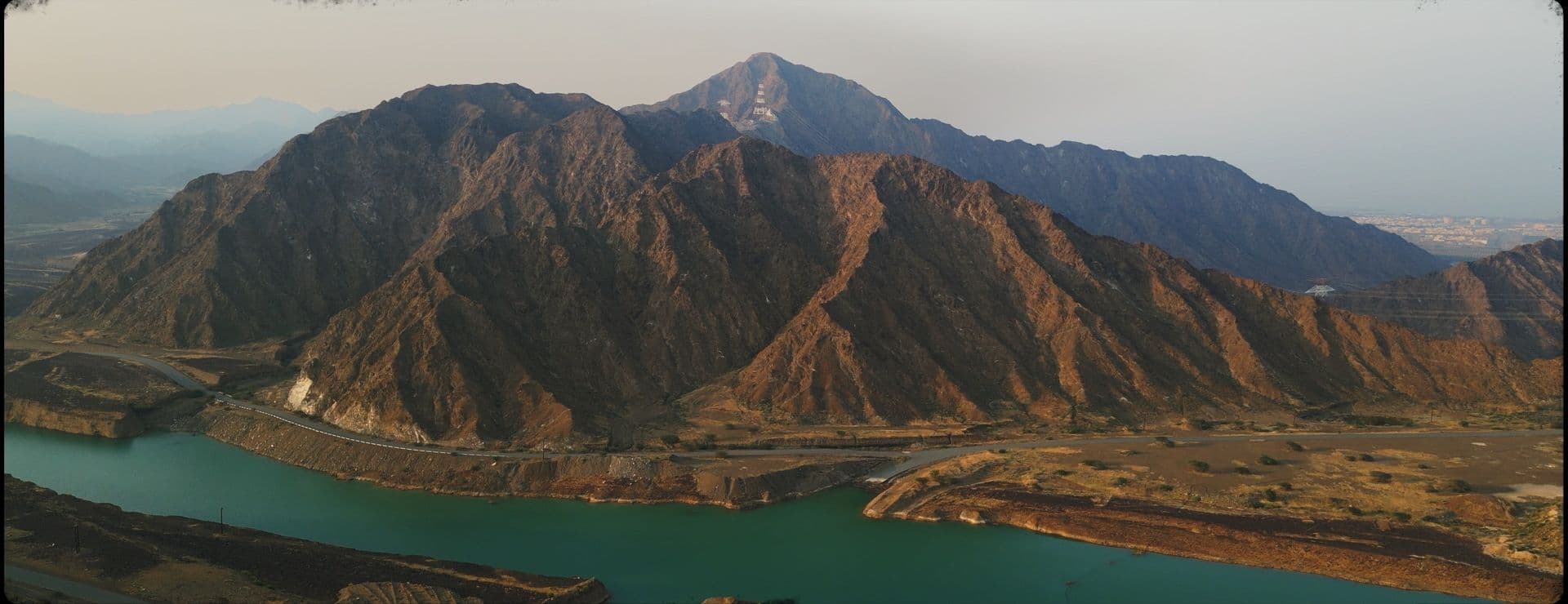
A nomination film is evidence, not decoration. It has to show the site or practice accurately and align with the written dossier. Our documentary on Wadi Wurayah was made for Fujairah's UNESCO file, which was successfully nominated as human heritage. Work of this kind brings two approvals together: permission to film at the site, and agreement from the body preparing the nomination on what the film must show and how it will be used. We have written separately about how to make a UNESCO nomination film, including how the script follows the file.
Natural and Archaeological Sites
Protected natural areas and archaeological sites often limit access to particular routes, seasons or times of day, to protect wildlife, terrain or excavated material. Some areas can only be filmed with an authorized escort or ranger. Archaeological teams may also restrict what can be shown of active digs or unpublished finds. Build these limits into the shooting plan early, because they decide what the film can show.
Government Filming Approval: Ministries, Courts and Institutional Premises
Filming inside a government building is a matter of institutional permission. The institution is both the location owner and, often, the subject.
Who Signs Off, and in What Order
Government filming approval in the UAE usually starts with written consent from the institution, often through its communications office, then department heads whose spaces and staff will appear. Large institutions may have their own internal sequence: communications first, then security, then facility managers. Health facilities raise patient privacy issues, and courts have strict rules about proceedings. Each signature is a separate step, so ask early who holds each one.
Some films take government itself as their subject. Challenge 71 was a documentary on a competition among the UAE's top government achievers across all sectors. A subject like that crosses many institutions, and each may need its own institutional filming permission.
Security Clearance for Sensitive Subjects
Some subjects involve security reviews in addition to location approval: national occasions, senior officials, secure facilities or classified operations. Expect requirements such as crew lists, identification documents, equipment declarations and a review of footage before release. These steps cannot be rushed from the outside. The right response is to plan for them from the start.
Working Through an RFP Instead of a Direct Request
When a government body commissions a documentary through a request for proposals, the commissioning institution often helps open doors to its own premises and sometimes to partner bodies. That is useful, but it does not grant every approval automatically. A well-written RFP states who will obtain which permissions, and the production partner's response should say how it will handle the rest. Our guide to an RFP checklist for UAE government bodies covers how to write this into the brief.
Drones, Archives and the Permissions Productions Forget
These permissions sit outside the main location chain, which is why they are easy to miss.
Aerial Filming Clearance
Drone filming permits in the UAE are a separate track from location permits. Clearance from aviation and security authorities applies regardless of who owns the land below. Airspace near airports, government buildings and sensitive infrastructure is restricted, and some locations that are easy to film from the ground cannot be filmed from the air at all. Requirements and fees change, so confirm the current process with the relevant aviation authorities before planning any aerial shot.
Using Archival Footage From State Collections
Heritage documentaries often rely on archival film, photographs and recordings held by national archives, libraries, broadcasters and families. Archival footage permission is a licensing question: who holds the rights, what use is allowed, for which territories and for how long. Access to view material is not the same as permission to broadcast it. The Department of Culture and Tourism's remit includes the National Library alongside its tourism and culture sectors (DCT), which shows how closely collections and cultural regulation sit together in Abu Dhabi.
Filming Inside Religious Sites
Mosques and other places of worship are managed by their own administrations and the relevant religious affairs authorities. Expect rules on prayer times, dress, areas that cannot be filmed, and how worshippers may appear. Approval is not only formal. Respect for the place and the community shapes what belongs in the frame.
A Permit Checklist for Your Production Timeline
Matching Permit Types to Location
Use this filming permit checklist for the UAE as a planning reference, not a legal summary. Confirm current requirements with each authority.
- Streets, parks, waterfronts: Typical approval needed: Emirate-level authority permission or notification; Additional layers to check: Road closures, night lighting, identifiable members of the public; Stage to start: Discovery
- Malls, developments, private promenades: Typical approval needed: Owner or operator consent; Additional layers to check: City-level permission if crew spills onto public land; Stage to start: Discovery
- Heritage buildings and modern-heritage sites: Typical approval needed: Heritage authority approval; Additional layers to check: Equipment limits, crew caps, access windows; Stage to start: Research
- Natural and archaeological sites: Typical approval needed: Site authority permission; Additional layers to check: Seasonal access, escorts, restrictions on showing excavations; Stage to start: Research
- UNESCO-track sites: Typical approval needed: Site and nomination-body agreement; Additional layers to check: Alignment with the nomination dossier; Stage to start: Discovery
- Ministries, courts, health facilities: Typical approval needed: Written institutional approval; Additional layers to check: Security review, privacy, footage sign-off; Stage to start: Discovery
- Religious sites: Typical approval needed: Site administration and religious authority approval; Additional layers to check: Prayer times, restricted areas, worshipper privacy; Stage to start: Research
- Aerial shots: Typical approval needed: Aviation and security clearance; Additional layers to check: Restricted airspace near sensitive sites; Stage to start: Scripting
- Archival material: Typical approval needed: Rights holder license; Additional layers to check: Territory, duration, broadcast use; Stage to start: Research
- Public screenings: Typical approval needed: Media Council approval, then event permit; Additional layers to check: Venue licensing; Stage to start: Post-production
When to Start, Stage by Stage
- Discovery. List every likely location and subject. Mark any that involve institutions, protected sites or national occasions.
- Research. Confirm ownership, heritage status and archive rights holders. Find out who signs each approval.
- Scripting. Lock the location list against the script and submit applications, including aerial requests.
- Production. Carry approvals on set and follow the agreed conditions to the letter.
- Post-production. Complete institutional footage reviews, finalize archive licenses and secure screening approvals before any premiere.
Frequently asked questions
How long does it typically take to get a filming permit in Abu Dhabi?
It depends on the location and how many layers are involved. A straightforward public location moves faster than a heritage site, a government building or an aerial shot, and a film that combines several of these takes as long as its slowest approval. We start the process at Discovery so the timeline follows the approvals rather than the other way around.
Do student or personal documentary projects need the same permits as commercial productions?
The scale may differ, but the underlying principle is the same. Authorities and location owners look at what is being filmed, where, and for what purpose, including whether the film will be published or shown. Anyone planning a student or personal project should check requirements directly with the relevant authority before filming.
Can a production company apply for permits on behalf of a government client?
Often, yes. The production company prepares and submits applications while the client provides institutional letters and introductions. Some approvals, especially access to the client's own premises, must come from the institution itself. A clear RFP sets out who is responsible for each permission.
What happens if a documentary is filmed without the required permit?
Consequences can include the shoot being stopped, equipment or footage being held, and penalties under local rules. Footage shot without approval may also be unusable, because institutions and broadcasters can refuse material without documented clearance. For legal exposure in a specific case, consult a qualified adviser.
Do permit rules differ for filming inside a mosque or other religious site?
Yes. Religious sites have their own administrations and rules on timing, dress, restricted areas and how worshippers can appear. These sit alongside any general filming permission, so plan for both and approach the site with the respect its role in the community deserves.
If a heritage or institutional documentary is on your calendar and the permit chain feels unclear, start a project with Sedrah Stories and we'll map the approvals alongside the research.