


Key takeaways
- A documentary series cost is not one film's price multiplied by the number of episodes. Discovery, research and the scripting framework are paid once and shared across every episode. Single-film cost guides never account for this.
- Per-episode costs repeat with every installment: filming days, episode-specific research, narration, editing and archival licensing.
- Series such as Sirat Arzag (12 short documentaries, 60+ hours of recorded intangible heritage) and Alwarq (14+ episodes) show how a shared research base changes the economics of scale.
- The three biggest swing factors in a UAE heritage documentary budget are the format each episode is shot on, the documentation depth of a UNESCO file like Wadi Wurayah, and episode count.
- At Sedrah Stories, we budget a series in two parts. Discovery and research are priced as one line. Production and post-production are priced per episode.
What Drives Documentary Series Cost in the UAE
A documentary series cost in the UAE typically falls between AED 150,000 and over AED 1 million per episode for comparable factual and TV series work, and a standard 10-episode series runs $500,000 to $5 million in total by international production benchmarks. Where you land inside that range depends on two budgets. One is shared and paid once. The other repeats with every episode. If you multiply a single film's price by twelve, you will overpay for research and underestimate the shoot. At Sedrah Stories, we build every series budget around that split, because the two halves behave differently as a series grows.
Those figures mark the outer edges. A premium streaming docuseries can run $5 million to $20 million. The top of the UAE per-episode range is high-end Arabic drama with location shoots and full post-production.
Heritage and institutional documentaries sit inside those edges. Where yours lands depends less on a headline rate and more on scope:
- how much research the subject demands
- how many filming days each episode needs
- what format the story is captured on
Every film goes through the same five stages: Discovery, Research, Scripting, Production and Post-production. In a series, the first three are largely shared. The last two repeat. That is the whole economics of a series in one sentence.
The Costs a Series Pays Once
Discovery and research, done once for the whole series
Discovery defines the film before anyone lifts a camera. It sets the subject, the occasion, the audience, the stakeholders who must sign off, and the access the story depends on. Research then builds the body of knowledge the films will stand on. That means archives, oral histories, experts, primary documents and the slow work of verification.
In a single documentary, all of that serves one film. In a series, it serves every episode. A heritage subject researched once can feed four films or fourteen. The cost of that research does not rise in step with the episode count.
Sirat Arzag is a useful reference. Its listing describes twelve short documentaries positioning the UAE among the old and new worlds, with more than 60 hours of recorded intangible heritage behind them. That ratio is the shape of a well-built series: a deep shared archive, and many short films drawn from it.
This is where a heritage documentary budget gains the most from scale. The research line stays largely fixed. The number of films it supports grows.
Building the scripting framework and narrative arc
Before individual episodes are written, a series needs a spine. That covers:
- the narrative arc across all episodes
- the structure each episode follows
- the voice of the narration
- the visual grammar
- the terminology
- the standards for cultural and historical accuracy
Research-driven scripting means those standards are set once, reviewed once and applied everywhere. Questions about how a tradition is named, how a historical figure is framed, or how a place is described in Arabic and English get settled at the framework stage. They are not reopened in every edit.
Episode scripts are then written inside that framework. Writing each one is a repeating cost. Building the framework is not. As the series grows, the shared cost is divided across more episodes, and the average cost per episode falls.
The Costs That Repeat With Every Episode
Multi-part series pricing is driven by the costs that scale with episode count. These are the lines to watch.
Filming days and crew mobilization
Each episode needs its own shoot: crew, cameras, lighting, sound, travel between emirates, and time on location. A heritage episode filmed in a mountain wadi, a coastal village and a city archive is three mobilizations, not one.
Permits follow the shoot, and the emirates charge differently. In Dubai, a filming permit carries a non-refundable processing fee of AED 500 per application, and a single application can cover multiple days and locations. The government location fee for long-form content, the category covering documentaries and series, is listed as AED 2,500 for up to 30 days.
In Abu Dhabi, documentaries generally pay a script approval fee of AED 500 and a filming permit fee of AED 500 per day. Ground permit review can take up to 15 working days. The practical difference matters for a series:
- Abu Dhabi: permit costs rise with every filming day.
- Dubai: grouping shoots into fewer applications keeps them contained.
Production rebate schemes can offset part of qualifying local spend: Abu Dhabi's rebate runs at a 35% base rate, with up to 50% available for larger productions. It's worth raising rebate eligibility early with any production partner.
These per-project permit costs sit on top of a production company's own annual licensing costs. A UAE media production company's trade license, NMC approval and content production permit stack typically totals AED 30,000 to AED 45,000 in year one, before any per-project location permits. Companies based in Dubai Studio City pay a separate production licence fee of AED 15,000 a year. This is a business cost your production partner carries rather than a line that shows up per episode, but it is part of why a credible, licensed partner's day rate reflects more than crew and equipment alone.
Episode-specific research and archival sourcing
Shared research sets the foundation. Each episode still needs its own layer: interviews with the people who hold that episode's story, documents specific to its subject, and verification of its particular claims.
Archival material adds a licensing line. Historical footage, photographs and documents held by archives carry usage terms that vary by source, territory and duration. A series that leans heavily on archive pays that cost episode by episode. A series built on newly recorded material pays more in filming days instead.
Narration, editing and post-production per episode
Post-production repeats in full for every episode. That includes:
- the edit
- color grade
- sound design and mix
- music
- graphics and maps
- narration recording
- subtitles and language versions
Episode length is the multiplier here. A long-format episode, like those in Alwarq (an ongoing series of 14+ episodes conveying knowledge in a light format by summarizing books), carries more edit time than a short documentary. If a series needs Arabic and English versions, plan for that across every episode rather than as a single line.
Single Film vs Series: Where the Budget Splits
The table below shows how each cost behaves in a single documentary compared with a multi-part series. It is the clearest way to see why a documentary series cost cannot be estimated from a single-film quote.
- Discovery: Single documentary: Paid once, carried by one film; Multi-part series: Paid once, shared across all episodes
- Core research: Single documentary: Paid once, carried by one film; Multi-part series: Paid once, shared across all episodes
- Scripting framework and narrative arc: Single documentary: Built for one film; Multi-part series: Built once, applied to every episode
- Episode scripts: Single documentary: One script; Multi-part series: Repeats per episode
- Episode-specific research and archive: Single documentary: One film's needs; Multi-part series: Repeats per episode
- Filming days and crew: Single documentary: One shoot schedule; Multi-part series: Repeats per episode
- Permits: Single documentary: Per shoot; Multi-part series: Accumulates with filming days and locations
- Narration, edit and post-production: Single documentary: One film; Multi-part series: Repeats per episode, scaled by length
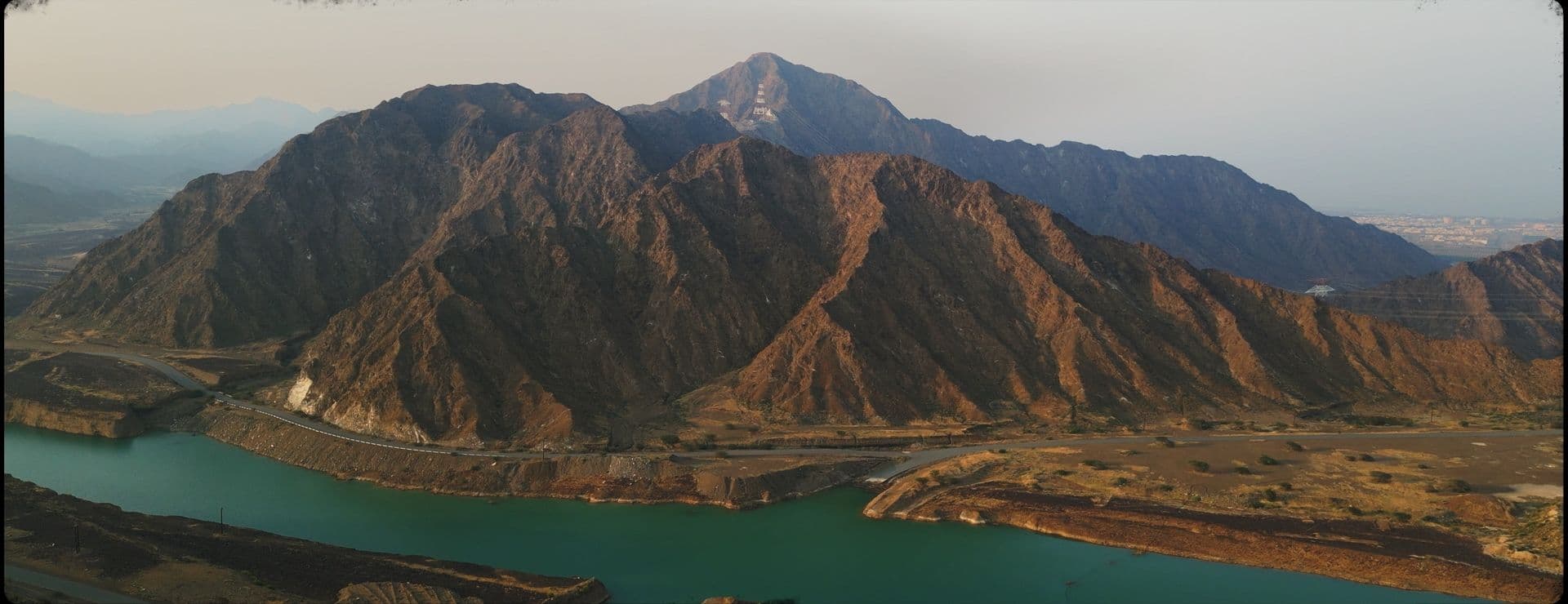
- Reference project: Single documentary: Wadi Wurayah, a documentary made for Fujairah's UNESCO file, successfully nominated as human heritage; Multi-part series: Sirat Arzag (12 short documentaries) or Alwarq (14+ episodes)
A single film like Wadi Wurayah carries its whole research and framework cost on one title. That is right for a film with one purpose, such as supporting a nomination file. A series spreads those same foundations across many titles. The total is higher, but the cost per finished minute often is not. How the fee is structured, whether as a day rate or a fixed fee, matters as much as the total, since each model handles the shared-versus-repeating split differently.
What Pushes the Budget Up or Down
Film stock versus digital capture
Some heritage documentaries are shot entirely on film, with no digitalization step. Film brings a texture and permanence that suits national memory and heritage subjects. It also brings costs that digital does not:
- the stock itself
- laboratory processing and scanning
- a disciplined shooting ratio, because every roll counts
In a series, those costs sit on the per-episode side and repeat. Choosing film for a twelve-episode series is a larger decision than choosing it for one film, and the choice should be made deliberately for the series as a whole rather than assumed by default.
Episode count and episode length
More episodes lower the average cost per episode, because shared costs are divided further. Longer episodes raise the per-episode line, because filming days and edit time grow with running time.
Twelve short documentaries and twelve long-format episodes are different budgets, even with identical research. Decide the format before asking for a quote. If you are unsure, ask for both.
Depth of research required for institutional or nomination files
A film made to support a UNESCO nomination or an institutional archive is held to a different standard than a commemorative piece. Every claim needs a source. Every practice must be documented accurately and respectfully. The film has to stand alongside a formal file.
That depth sits mainly in the research and scripting stages. It makes this the single largest swing in a heritage documentary budget. Wadi Wurayah, made for Fujairah's UNESCO file, is the kind of project where research depth defines the work.
How to Ask for a Series Quote That's Actually Comparable
Quotes from different production companies are often impossible to compare. One firm folds research into a day rate. Another lists it separately. A third hides it inside post-production. A clear request for proposal fixes that.
Ask for shared costs and per-episode costs as separate lines
Ask every bidder to price two sections:
- Shared costs, priced once: discovery, core research, the scripting framework and narrative arc, and any series-wide design such as titles, music themes or graphic language.
- Per-episode costs, priced per installment: episode research and archive, scripting, filming days, permits, narration, edit and post-production.
Then ask for a total at your intended episode count. With that structure, you can see whether a low total comes from efficient shared research or from thin per-episode work.
Ask how research scope changes if episode count changes later
Series grow. An institution approves eight episodes, then extends to twelve. Ask each bidder how their shared research would support additional episodes, and at what cost.
A partner who researched deeply at the start can often extend a series mostly at per-episode rates. A partner who researched only what the first episodes needed will need to reopen discovery. Sirat Arzag and Alwarq are both listed as ongoing, which is exactly the situation where this question matters.
Related: Commissioning a heritage documentary in the UAE · Day rate versus fixed fee pricing · Writing a documentary proposal for UAE institutions
Frequently asked questions
How much does a single documentary cost in the UAE compared with a series?
A single documentary carries its full discovery, research and scripting costs on one film. A series divides those shared costs across every episode and adds repeating per-episode costs. The series total is higher, but the average cost per episode is usually lower than commissioning the same number of standalone films.
Does shooting on film instead of digital change the budget significantly?
Yes. Film adds stock, processing and scanning costs, and it requires a careful shooting ratio. In a series those costs repeat with every episode, so the decision matters more than it does for a single film. Some productions reserve film for key sequences to balance texture against budget.
How many episodes make sense for a heritage or institutional series?
It depends on how many distinct stories the research supports, not on a target number. A subject with deep material, like the intangible heritage behind Sirat Arzag's twelve documentaries, can sustain a longer series. A narrower subject is often stronger as a single film or a short run.
Can research costs be shared across multiple documentary series for the same institution?
Often, yes. Archives, interviews and verified sources gathered for one series can inform another on a related subject, which reduces the research needed the second time. Ask your production partner how research is recorded and stored so it remains usable for later commissions.
How long does a 12-episode documentary series typically take to produce?
We don't publish a general timeline, because discovery, research, filming windows and approvals vary by subject and episode count. What is fixed is the permit stage: Abu Dhabi's CMA ground permit review can take up to 15 working days per application. Ask any partner for a stage-by-stage schedule across discovery, research, scripting, production and post-production before committing to a delivery date.
If you're weighing up a single film against a multi-part series, start a project with Sedrah Stories and we'll walk the budget through research first, then the frame.