


Key takeaways
- Sedrah Stories plans every government anniversary documentary in the UAE through five stages: discovery, research, scripting, production and post-production. It is never a single filming day.
- The occasion sets the film's structure. A founding anniversary, a leadership milestone and an institutional jubilee each need a different narrative arc.
- Research and archival gathering should begin months before filming. Draw on national archives, institutional records and testimony from the people who lived the period.
- Choose between a single film and a short-film series by how many stories the anniversary needs to carry, not by budget alone.
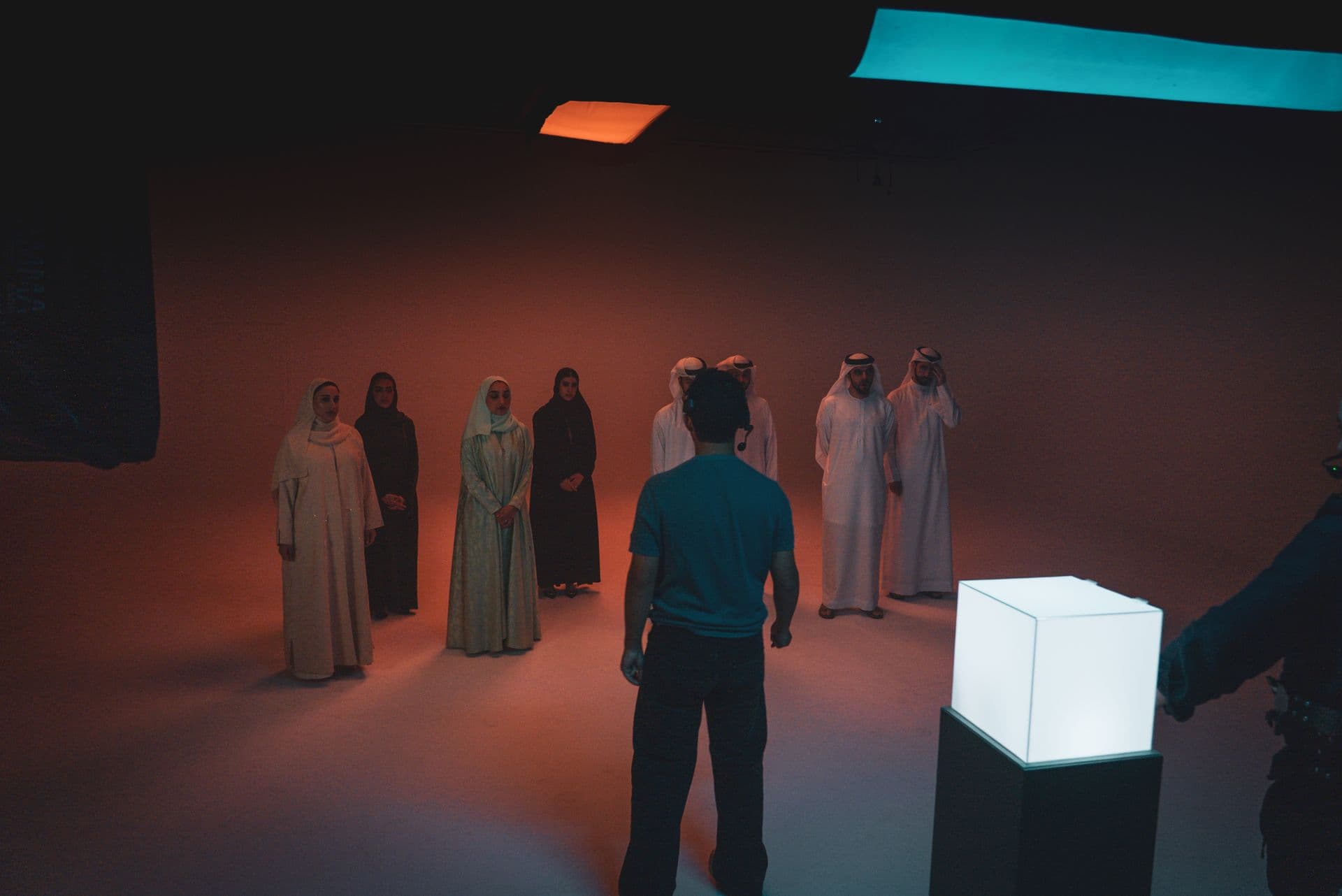
- Challenge 71 is our documentary on a competition among the UAE's top government achievers across all sectors.
What a Government Anniversary Documentary in the UAE Needs to Do
A government anniversary documentary in the UAE is a researched film that marks a dated occasion and records what that occasion means. It is not a highlight reel of speeches and ribbon-cuttings. It should still hold up when someone watches it in ten years and needs to understand what happened, who made it happen and why it mattered.
That is why Sedrah Stories treats it as research-driven documentary production rather than event coverage. Every film goes through the same five stages: research first, then the frame. An institutional film made this way becomes part of the record. A film made without it becomes a souvenir.
Marking an Occasion Versus Promoting an Institution
Promotion lists achievements. Marking an occasion asks what changed, what it cost and what it made possible. The first approach produces a sequence of facts and figures over music. The second produces a story with a beginning, a turning point and a present, told by the people who carried it.
Audiences can tell the difference, and so can future researchers watching the film years from now. A documentary can still show an institution at its best, through evidence and testimony rather than adjectives.
Who Commissions These Films and Why
Federal and local government entities, semi-government institutions, cultural foundations and private organizations with a public role commission these films. The reasons tend to fall into a few groups:
- A founding anniversary of the institution itself
- A national occasion, such as Eid Al Etihad on 2 December, which marks the 1971 union of the emirates. UAE National Day 2026 marks 55 years of unity across the seven emirates.
- A leadership milestone or a significant national program reaching a landmark year
- The need to capture first-hand testimony while the people who lived the period can still give it
Start With the Occasion, Not the Camera
Before anyone discusses lenses, locations or drones, the occasion has to be defined. The type of anniversary decides the narrative arc, and the arc decides almost everything that follows: who is interviewed, how much archive is needed, what tone the film takes and how long it runs. UAE heritage storytelling works best when the structure grows out of the occasion itself.
A Founding Anniversary
A founding anniversary calls for an origin story. The arc usually runs chronologically, from the conditions before the institution existed, through the decision to create it, to the present. This kind of national anniversary film leans heavily on archive: early photographs, founding documents, first broadcasts. Its most valuable voices belong to the first generation: founders, early staff and the families of key figures.
A Leadership or National Milestone
A leadership or national milestone calls for tribute and restraint. The scale is national, and so is the scrutiny. Tone matters more here than in any other format. Narration has to be measured, and every claim has to be sourced. Approval chains tend to be longer, so the script needs to settle early. The arc often moves between the personal and the national, showing how a vision became policy and how policy reached people's lives.
An Institutional Jubilee
An institutional jubilee calls for a story about people and work. It can be told in the present tense, following what the institution does now and setting it against where it began. A jubilee film does not have to be built around ceremony at all. Our film Challenge 71, a documentary on a competition among the UAE's top government achievers across all sectors, shows how government excellence can be told through participants and competition. When a film follows people with something at stake, the institution's values come through without being announced.
You can see examples of our heritage and institutional films to compare how different occasions shape different structures.
A Step-by-Step Timeline for Planning the Film
A documentary production timeline in the UAE has to work backward from a date that will not move. The five-stage methodology gives that timeline its shape. Each stage has a clear question to answer and a clear output before the next one begins.
- 1. Discovery: The question it answers: What is this film for, and for whom?; What the institution supplies: Occasion, audience, delivery date, decision-makers; What it produces: A signed-off brief and creative direction
- 2. Research: The question it answers: What actually happened?; What the institution supplies: Archive access, records, contact lists; What it produces: A factual spine and source register
- 3. Scripting: The question it answers: How will the story be told?; What the institution supplies: Review and fact-checking; What it produces: An approved script and interview plan
- 4. Production: The question it answers: What do we need to film, and where?; What the institution supplies: Location access, interviewee availability; What it produces: Interviews, filmed scenes, aerials
- 5. Post-production: The question it answers: How will the audience experience it?; What the institution supplies: Review rounds, final approvals; What it produces: Master film, language versions, cut-downs
Discovery: Defining the Brief and the Date
Discovery sets the occasion, the audience, the screening context and the delivery date. It also identifies who signs off. Approvals that come late are the most common reason anniversary films are rushed, so the review chain should be agreed at the start.
Research: Building the Factual Spine
Research builds the verified sequence of events, names and dates the film will stand on. It is the longest stage and the one most often underestimated. Every fact in the eventual script should trace back to a source in the research register.
Scripting: Turning Research Into a Narrative
Scripting selects from the research and gives it shape. In documentary work the script is a living plan: it sets out the arc, the questions for each interviewee and the archive each scene needs. Interviews later refine it.
Production: Filming Against a Fixed Occasion
Production works to a fixed occasion, so the logistics have to be settled early. Ground filming inside the country requires a permit application that states the purpose of filming, the exact start and end dates, and the locations. Budget for the fees that come with it: a non-refundable video permit application fee of AED 500 applies in Dubai, and filming at some private or semi-government locations can cost up to AED 25,000 per day, depending on the location and requirements. Aerial footage brings its own approvals, so plan it as a separate line in the schedule. Remember too that the national calendar gets crowded: Dubai's 2026 National Month programme runs from 3 November to 2 December and brings together government, semi-government and private-sector organizations. A film meant to premiere in that window should finish filming well before it opens.
Post-Production: Cutting for the Audience That Will Watch
Post-production shapes the film for the room it will play in. A ceremony screening, a broadcast slot and a social media release each need different lengths and pacing. Plan the language versions, subtitles and short cut-downs at this stage, alongside an archive master that the institution keeps.
Gathering Archives and Testimony Before Filming Starts
Anniversary films depend on archives more than most documentary formats, because they are about time passing. The institution holds much of this material itself, often without knowing exactly where. Assembling it early is the single most useful thing a commissioning team can do.
What Counts as Usable Archival Material
Usable archival footage and material includes:
- Film reels, videotape and early broadcast recordings
- Photographs, negatives and slides, with dates and names where known
- Founding documents, letters, decrees and internal memos
- Maps, plans and architectural drawings
- Recorded oral histories and earlier interviews
- Objects, uniforms and early equipment that can be filmed
For every item, establish who holds the rights. Licences for archive and interview material should be agreed in writing and should state what is being licensed, for how long and where it can be used. Under UAE copyright law, using filmed material without a written licence carries imprisonment of not less than two months and a fine of not less than AED 10,000 and not more than AED 100,000, with the penalty multiplied by the number of works involved. This protects the institution when the film is rebroadcast years later, and it protects everyone involved from that exposure.
Heritage filmmaking in the UAE can also draw on existing national documentation. The UAE's periodic reporting to UNESCO records more than 38 extensive studies on elements of the national intangible heritage inventory, a useful body of background research for culturally grounded films.
Finding the People Who Can Speak to the Period
Testimony gives the archive its meaning. The strongest voices are usually founders and early employees, retirees who remember how things were done, families of key figures and community members whose lives the institution changed. Reach them early. Older witnesses may need gentle pre-interviews and flexible scheduling, and some of the most important conversations happen off camera before anyone agrees to be filmed.
Single Film or Short-Film Series: Choosing the Right Format
The documentary format choice follows the material. Count the stories the anniversary needs to carry, then decide.
When One Film Is Enough
A single film works when there is one clear arc: one founding, one turning point, one present. It suits ceremony screenings, where an audience watches together once, and occasions where the message should land in a single sitting.
When the Material Calls for a Series
A short-film series in the UAE context suits anniversaries that span several sectors, regions or decades. It also fits occasions where the institution wants material to release over weeks rather than on a single day. Each episode can follow one person, one era or one achievement, and together they build a fuller record than one film could hold. For a deeper look at the trade-offs, read our comparison of short-film series and feature documentaries.
Seven Questions to Ask a Studio Before You Commission the Film
Choosing a documentary studio in the UAE for a national occasion is a decision about method as much as style. Ask every shortlisted government documentary partner:
- How does your research stage work, and who on your team does it?
- Can you show institutional or heritage films you have made, and explain how each one was structured?
- How do you verify facts and keep a source register?
- How do you handle archive rights and written licences for interviews?
- Who manages filming permits and location approvals?
- How many review rounds are built into scripting and post-production, and when?
- Will you deliver Arabic and English versions, cut-downs and an archive master?
A studio that answers the first and third questions in detail is usually the one that will get the rest right.
What to Prepare Before You Request a Proposal
A documentary proposal is only as good as the brief behind it. Before you contact a studio, prepare:
- The occasion, its date and the screening or broadcast context
- The primary audience and any secondary audiences
- The names of the people who will approve the script and the final cut
- A first inventory of archive material and where it is held
- A list of potential interviewees, with contact routes
- Any sensitivities, protocol requirements or no-go topics
- The languages and formats you need on delivery
- An indicative budget range, so the proposal can be scoped honestly. As a starting point, location filming fees alone can run up to AED 25,000 per day at some private or semi-government sites, before research, scripting and post-production costs are added.
For a fuller guide, see our article on how to brief a documentary production company.
Frequently asked questions
How long does it take to produce a government anniversary documentary in the UAE?
It depends on the depth of research, the amount of archive and the number of review rounds, but one part of the timeline is fixed: permit approval typically takes 5-7 days and has to be built into the schedule on top of that variable research and approval time. Research should begin months before filming, and interviewee availability and internal approvals all add further time. Work backward from the delivery date and start discovery as early as you can.
Can old archival footage be combined with newly filmed material in the same documentary?
Yes, and most anniversary films depend on that combination. Archive establishes the past, and new interviews and filmed scenes connect it to the present. Every archival item needs written rights clearance stating how and where it can be used.
Who should be interviewed for a national or institutional anniversary film?
Start with people who lived the period: founders, early staff, retirees and the families of key figures. Add current leaders and employees who can speak to the present, and community members whose lives the work affected. A balance of generations gives the film its sense of time.
What language should a UAE government anniversary film be narrated in?
Arabic narration is the natural choice for most national occasions, with English subtitles or a separate English version for wider audiences. The decision should follow the screening context and the audience defined in discovery. Plan both versions from the start so neither feels like an afterthought.
Does an anniversary documentary need the same level of research as a UNESCO nomination film?
Both need rigorous research, but a UNESCO file sets formal requirements. Each intangible heritage nomination must include Form ICH-02, evidence of community consent, an inventory extract, ten photos and a video. An anniversary film has no fixed rulebook, so its standard of accuracy depends on the studio's method.
If your institution is planning an anniversary that deserves more than a highlight reel, start a project with Sedrah Stories and we'll begin with discovery.