





Key takeaways
- A sync license covers the composition. The recording needs its own master license. Clear one without the other and the film is still exposed.
- At Sedrah Stories, our five-stage process plans music clearance during Research and Scripting, not after the edit is locked.
- Traditional and archival recordings in heritage films often need separate permission from performers, their families or the institutions that hold the rights.
- An original score avoids third-party sync and master clearance, though ownership still needs to be set out clearly in the composer's contract.
- UNESCO nomination films and national tribute pieces face extra scrutiny over music sourcing, because the footage becomes part of an official record.
Documentary music licensing comes down to one principle. Every piece of music in your film needs written permission from whoever owns the song and whoever owns the recording. That permission must cover the places, platforms and period in which the film will be seen. At Sedrah Stories, we treat that permission as part of the story's research, not a form filed in the final week. Clear it early and document it fully, and the music becomes a settled part of the record. Leave it late, and a single cue can hold a finished film back from its audience.
This guide explains what the rights are, how to clear them in sequence, and where heritage and institutional films need more care than a corporate promo.
What Music Rights Actually Cover in a Documentary
A piece of recorded music is two works sitting on top of each other. One is the song. The other is the sound of a particular performance of it. Each has an owner, and each owner must agree before the music can be synchronized to your images.
The Composition Right and the Master Right
The composition is the melody, the harmony and any lyrics. It belongs to the songwriters, and usually to the publishers who represent them. Permission to pair it with moving images is called a sync license.
The master is one specific recording of that composition. It typically belongs to a record label, a performer, or whoever paid for the session. Permission to use that recording is a master use license. As one industry guide puts it, music clearance for film requires two licenses: one from the publisher for sync, one from the label for master use.
Why a Single Song Needs Two Permissions
The publisher can say yes while the label says no. In that case you hold the right to the song but not to the recording you wanted. A song with several writers may also have several publishers, each controlling a share. Every share has to be cleared.
In the UAE, these rights sit under Federal Decree-Law No. 38 of 2021 on Copyright and Neighboring Rights, which replaced Federal Decree-Law No. 7 of 2002 and came into force on 2 January 2022. Where a film will travel abroad, other countries' laws apply too. A qualified media lawyer should review any agreement before it is signed.
A Step-by-Step Approach to Documentary Music Licensing Before You Lock the Edit
Every film we make moves through the same five stages: Discovery, Research, Scripting, Production and Post-production. Music belongs in the first three, not only the last.
Flag Every Music Need at the Research Stage
During Discovery and Research, we map every moment where music might enter the film:
- Score written or chosen to carry a scene.
- Songs embedded in archival footage, broadcasts or home recordings.
- Live music performed at an event you plan to film.
- Music that may be playing in the background during interviews or location shoots.
Each item gets an owner to trace and a question to answer. Some will be simple. Others, especially archival material, can take far longer to resolve than the edit itself.
Request Clearance Before You Cut the Scene In
At the Scripting stage, send requests for any music you intend to use. A useful request describes the scene, the expected duration, how the music is heard (background or featured), the media, the territories and the term.
Be wary of temp tracks. An editor who cuts to an uncleared song shapes the rhythm of the scene around it, and replacing it later costs more than the license would have. If you can avoid temp music you have not cleared, do.
Phasing is a legitimate approach. Many indie films start with festival-only licenses, paying a lower fee to screen at festivals, then buying broader rights if distribution follows. An institutional film planned for a festival run and a later broadcast can follow the same pattern, as long as the price of the later step is agreed in advance.
Keep a Running Cue Sheet as You Edit
A music cue sheet lists every cue in the film: title, writers, publishers, master owner, time in and time out, duration and type of use. We update it with every cut, not once at the end.
Before the film locks, the paperwork should be complete. That means a signed sync license from the publisher specifying fee, term, territories, media and a waiver of future claims, and a signed master use license from the label or master owner on the same terms. If you are choosing a documentary post-production partner, ask how they maintain the cue sheet and who checks it against the signed licenses.
Original Score or Licensed Track: Weighing the Two Paths
Both paths can serve a film well. The choice turns on ownership, cost control and schedule.
What an Original Score Gives You
A commissioned score is written for your scenes, your pacing and your subject. There is no third-party recording to clear, and no label to approach. The terms are negotiated directly with the composer, which gives an institution clear control over how and where the music is used. The composer must be briefed early, ideally during Scripting, so the music grows with the story rather than being fitted to it afterwards.
What a Licensed Track Gives You
A licensed track brings something an original score cannot: a recording the audience already knows, or one that is itself part of the history being told. Fees vary widely. One fee guide puts typical documentary sync fees at roughly $1,000 to $10,000 per side for festival or limited use, with more required for broadcast and streaming across wide territories. "Per side" means the composition and the master are each priced separately.
- Rights to clear: Original score: Set out in one composer agreement; Licensed track: Composition and master, often from different owners
- Cost control: Original score: Agreed once, up front; Licensed track: Varies by media, territory and term; may rise with wider use
- Ownership: Original score: Defined by contract (see UAE law below); Licensed track: Stays with publisher and label; you hold a license
- Schedule: Original score: Composer needs time to write and record; Licensed track: Clearance can stall if an owner is slow or refuses
- Fit to the film: Original score: Written to the scenes; Licensed track: Scenes are often cut to the track
- Cultural or historical weight: Original score: Built from research; Licensed track: Carried by the recording itself
When Each Choice Makes Sense
An original score suits a film meant to serve as a lasting institutional record, screened across many platforms for many years. A licensed track suits a film where a specific recording marked the moment being remembered. Many films use both.
Music shares the soundtrack with the voice that guides the audience, and we decide both together. Our guide to choosing a documentary narrator voice over covers the other half of that decision.
Where Heritage and Institutional Films Need Extra Care
A corporate film can swap one track for another with little consequence. A heritage film often cannot. The music may be the heritage.
Archival Recordings and Who Holds the Rights
An archive that holds a tape does not necessarily hold every right in it. The composer, the performers and the producer of the recording may each have a claim, and the title of the UAE decree-law itself recognizes neighboring rights alongside copyright. Where performers have died, their families or estates may be the people to approach.
Protection also lasts longer than many assume. Under UAE law, musical works are protected for the author's lifetime plus 50 years after death, and audiovisual works for 50 years from creation. A recording that feels historical may still be protected. Whether a particular recording is protected is a question for legal counsel, not an assumption.
Traditional and Folk Music in National Tribute Films
A traditional melody may belong to no single author. A specific arrangement or recorded performance of it usually does. The ensemble, the arranger and the recording owner may all need to be asked.
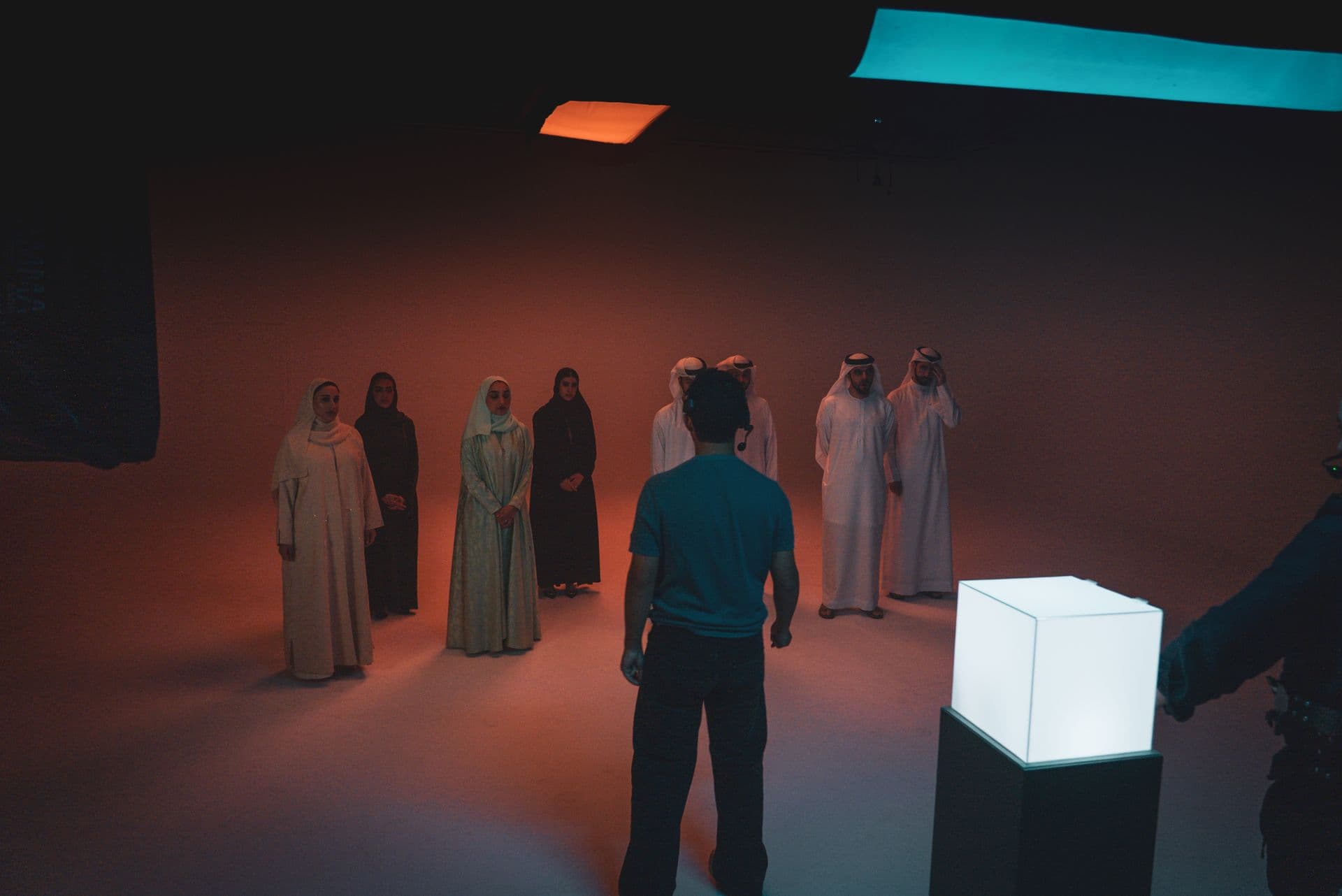
There is also a question beyond law. Some music belongs to particular ceremonies or communities, and using it in the wrong context is a failure of respect, whatever the license says. For The Pledge Day, our tribute for Union Pledge Day on 18 July, shot 100% on film with no digitalization, research notes and references sit beside the frames they informed. Music on a national occasion deserves that same discipline. Every source should be known, recorded and respected.
Music in a UNESCO Nomination File
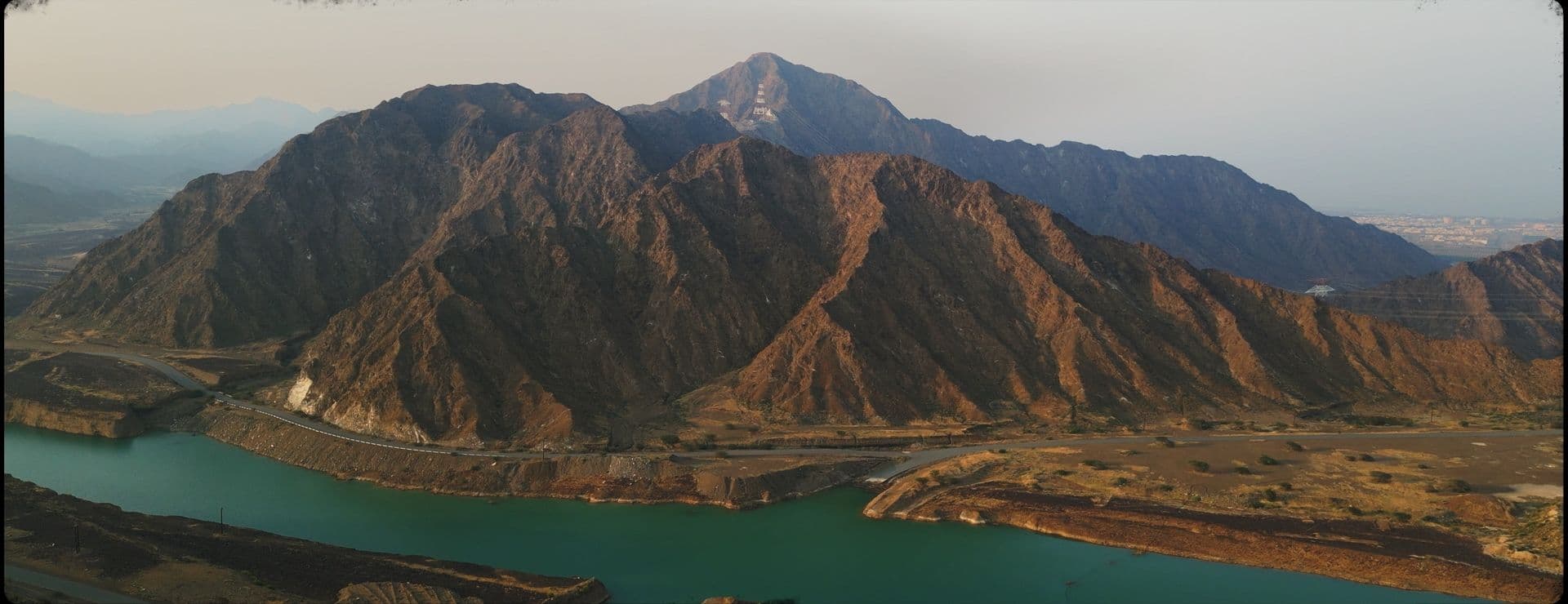
A nomination film is read as part of a formal case. Wadi Wurayah was a documentary made for Fujairah's UNESCO file, which was successfully nominated as human heritage. A film of this kind becomes part of an official record, so its music should be as well documented as its facts. Ask the body preparing the file what rights documentation it expects, and keep signed licenses and the cue sheet with the master files.
Six Questions to Ask a Composer or Music Licensor Before You Commit
Disputes after delivery usually trace back to a question nobody asked. These six cover most of the ground.
Questions About Ownership and Territory
- Do you control all of the composition and the master, or only a share? If only a share, find out who holds the rest.
- Which territories and what term does the license cover? A film for a local audience today may screen internationally later.
- For a commissioned score, who owns the music and what may the composer reuse? Under Article (29) of the UAE decree-law, the composer of the musical score is a joint author "if his composition is made specifically for the Work in question". The law also provides that during the agreed period of use, the producer represents the authors of an audiovisual work "unless a written agreement is made to the contrary". The contract should set out ownership plainly, and counsel should review it.
Questions About Broadcast and Festival Use
- Which media are included? List festival screenings, broadcast, streaming, institutional events, trailers and short social cutdowns, and confirm each.
- If we start with festival rights, what will broader rights cost, and can that price be fixed now?
- Will you sign a waiver of future claims and supply full cue sheet details? Without both, the paperwork will not stand up when a broadcaster asks for it.
What to Prepare Before You Brief Us on Music
A strong music brief starts long before anyone hears a note. It starts with knowing where the film will live.
Information to Gather Before the First Conversation
- Where the film will be shown: events, broadcast, streaming, festivals, social channels.
- The territories and the length of time it should remain in use.
- Any fixed dates, such as a national occasion or a submission deadline.
- Music you already have in mind, and why it matters to the story.
- Archival material that may contain music, and who currently holds it.
- Cultural or ceremonial sensitivities, and who must approve the final sound.
- The decision-makers who will sign off on licenses and contracts.
Our guide on how to brief a documentary production company covers the wider brief. When you are ready, you can start a project with Sedrah Stories and we will build the music plan into Discovery from the first meeting.
Frequently asked questions
Do documentaries need a music license for even a few seconds of a song?
There is no widely accepted number of seconds below which music becomes free to use. A short excerpt is still a use of both the composition and the recording. Some legal systems allow limited exceptions, but whether one applies depends on the facts and the jurisdiction, so ask a qualified lawyer before relying on it.
What happens if a documentary uses copyrighted music without clearance?
Broadcasters, platforms and festivals may refuse the film or ask for proof of clearance it cannot provide. The rights holder may also bring a claim, and the music may have to be removed, forcing a re-edit. The risk is far cheaper to prevent than to repair.
Can a documentary use a cover version instead of the original recording?
A cover avoids the original master, but the composition still needs a sync license from the publisher. The cover recording is a new master with its own owner, so that right must be cleared too. Commissioning your own recording of a cleared song is one way to control the master side.
Is royalty-free music the same as fully cleared music?
No. Royalty-free usually means you pay once rather than per use, not that the music is free of conditions. Read the license for permitted media, territories, any exclusions on broadcast or political use, and whether the seller controls all the rights it is granting.
Who owns the rights to a custom score written for a documentary?
It depends on the contract. Under UAE law, a composer who writes a score specifically for a work is treated as a joint author, and the producer represents the authors during the agreed period of use unless a written agreement says otherwise. Define ownership, reuse and territory in writing, and have counsel review it.
Tell Sedrah Stories about your film, and we will plan the music clearance alongside research, scripting and the edit, not after it. Start a project.