




Key takeaways
- A showreel alone does not prove a company can handle institutional or heritage work. Ask who the named clients were and what each project actually required.
- A credible documentary company can describe its process step by step, not just its output. At Sedrah Stories, every film moves through five stages: Discovery, Research, Scripting, Production, Post-production.
- For UNESCO nomination files or national anniversaries, ask specifically about cultural sensitivity review and archival sourcing, not just filmmaking skill.
- Red flags include vague answers about research methods, no named institutional references, and reluctance to explain how a script was developed before filming began.
- A short written checklist covering track record, methodology, archival handling and references gives you a consistent way to compare production companies before you sign.
What Verifying a Documentary Production Company Actually Means
To verify a documentary production company, you check three things beyond the reel: a track record you can confirm with named institutions, a research and scripting process the company can explain in order, and evidence that it handles archives, communities and national subjects with care. Then you confirm its licensing and permits. At Sedrah Stories, we treat these as the real credentials, because a beautiful frame proves craft but says nothing about whether the history behind it is accurate.
The distinction matters most for the work institutions commission in the UAE. A tribute marking a national occasion, a series on intangible culture or a film for a heritage nomination will be watched by people who know the subject intimately. An error in a date, a name or a custom is not a stylistic flaw. It becomes part of the record.
Verification also has a legal layer. In the UAE, a trade license is only the starting point. The National Media Authority's commercial media license service lists the documents applicants must provide, including a memorandum of association, a trade license and a lease. The trade license is a prerequisite, not the finish line. Ask to see the media license itself, and check that it names the current regulator.
Checking the Track Record Behind the Showreel
A showreel is an edit. It is designed to show the best ninety seconds a company has ever shot, often cut from projects with very different briefs. It tells you about taste and technical skill. It cannot tell you who held the research, who wrote the script, or whether the client signed off on every fact.
Look Past the Reel to the Client List
Start with names. A company that has worked with government or semi-government bodies should be able to tell you which ones, and which film was made for each. If a credit appears on the reel, ask which institution commissioned it and whether that institution would speak to you.
Look for a pattern, not a single headline credit. One national film can be luck or subcontracting. A body of work across heritage, institutional and factual subjects suggests a team that understands how these projects run. You can see the kind of record we mean in our documented work with UAE institutions, where each film is listed with what it was made for.
Ask What Each Project Actually Involved
A credit can mean many things. The company may have led the whole film, or it may have supplied a camera crew for two days. Ask directly:
- Did you develop the concept, or receive a finished script?
- Who carried out the research, and what sources did it rely on?
- Who on your team handled interviews and approvals with the client?
- Which parts, if any, were subcontracted?
Scope is the honest measure of experience. Take Challenge 71, our documentary on a competition among the UAE's top government achievers across all sectors. A film spanning achievers across every sector of government carries a different scope than a single-subject portrait. When a company lists a credit like this, it should be able to explain what kind of undertaking it actually was.
Confirming the Methodology, Not Just the Output
Output is what you see on screen. Methodology is what produced it, and it predicts what you will get on your own project far better than any finished film.
Why a Named Process Matters for Institutional Work
Institutions work through review cycles, committees and approvals. A production partner without a defined process will improvise around those stages, and improvisation is where facts slip and timelines stretch.
A named, repeatable process gives everyone a shared map. Ours has five stages:
- Discovery: understanding the institution, the occasion, the audience and what the film must achieve.
- Research: building the factual and cultural foundation from primary sources, archives and interviews.
- Scripting: shaping the research into a narrative that the client reviews before any camera rolls.
- Production: filming against an approved script and shot plan.
- Post-production: editing, sound, grading, graphics and final review.
Every film goes through the same five stages: research first, then the frame. Whatever company you speak to, ask it to describe its own stages in order. If it cannot, the process probably lives in one person's head.
Questions That Reveal Whether Research Comes First
These questions separate research-led companies from those that research while editing:
- What happens between signing and the first day of filming?
- Who on your team is responsible for fact-checking, and what is their background?
- How do you resolve conflicting sources on a date or event?
- At what point does the client approve the script, and can the script change after filming?
- Can you show a redacted research document or treatment from a past project?
A research-led company answers these quickly and specifically. If you are preparing the commission yourself, our guide on how to write a documentary proposal for UAE institutions shows how to frame these expectations from the outset.
Credentials That Matter for Sensitive or National Projects
Some films carry more weight than others. A UNESCO nomination film becomes evidence in an international file. A national anniversary film speaks on behalf of the country. These projects need checks that a corporate brief never would.
UNESCO and Heritage Nomination Experience
A nomination film is not simply a documentary about a heritage element. It is one part of a defined package. For the Representative List of the Intangible Cultural Heritage, a complete file includes a nomination form (ICH-02), evidence of community consent, an inventory extract, ten photos and a video. The Intergovernmental Committee has also ruled that nominations are only complete with documentary evidence that the element is included in an inventory, with an extract in English or French as well as the original language if different.
For World Heritage nominations, the Operational Guidelines expect images of a quality suitable for printing, at 300 dpi minimum for digital photographs, and supplementary film or video if essential. A filmmaker working on such a file should know these standards without being told.
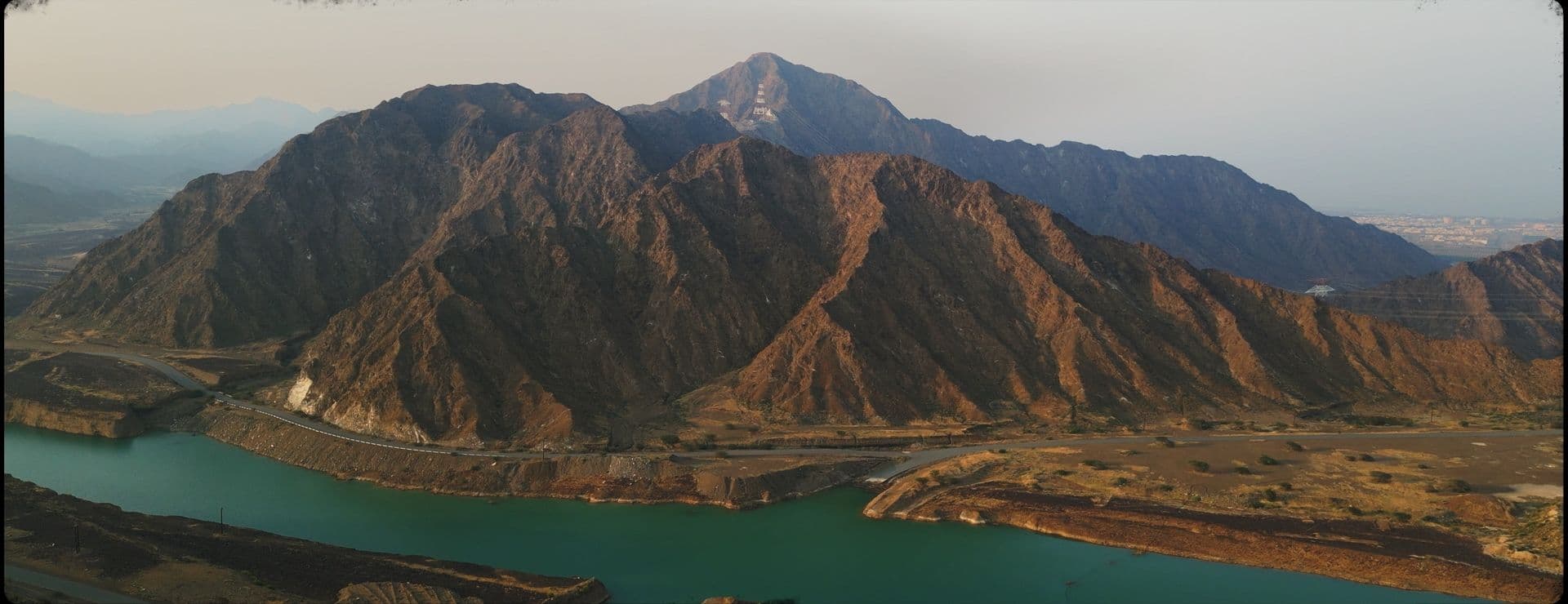
Ask the company which deliverables in the file it has produced before, and how its film related to the rest of the documentation. Our film on Wadi Wurayah was made for Fujairah's UNESCO file, which was successfully nominated as human heritage. Prior UNESCO experience is not the only proof of capability, but a company should at least understand how the file fits together. We cover this in more depth in our guide to choosing a UNESCO nomination film specialist.
Handling of Archives and Cultural Sensitivity
UNESCO guidance names two criteria as indispensable for inventorying intangible heritage: recognition of the practices as intangible cultural heritage, and the participation and consent of the communities concerned. For a filmmaker, that means consent has to be sought, recorded and stored properly. Ask how the company documents consent on camera and who keeps those records.
Archives raise similar questions. Ask where archival footage and photographs will come from, who holds the rights, and how the company verifies the date and context of each image. A misdated photograph in a national film is hard to retract once it airs.
Permits belong here too. A trade license does not authorize filming everywhere in the UAE. Specific shoots may need approval from the National Media Authority, emirate-level authorities, location owners or other competent bodies, depending on location, activity and equipment. A credible company can explain which approvals your project needs and who will secure them.
A Verification Checklist Before You Sign
Use the same checklist for every company on your shortlist. It turns impressions into evidence you can compare side by side. Before you start these conversations, it helps to know how to brief a documentary production company, so that each one is answering the same question.
- Media license: What to request: Copy of the commercial media license; A credible answer: Current license issued by the National Media Authority; A warning sign: Only a trade license, or a predecessor body named
- Track record: What to request: List of institutional clients with matching films; A credible answer: Named institutions, specific films, clear role on each; A warning sign: Logos without films, or films without clients
- Project scope: What to request: Description of the company's role on two past credits; A credible answer: Led concept, research, script and production; A warning sign: Vague about who did what, or mostly subcontracted
- Methodology: What to request: Written outline of the production stages; A credible answer: Named stages in order, with client approval points; A warning sign: "We adapt to each project" with no structure
- Research: What to request: Sample treatment or redacted research document; A credible answer: Sources cited, conflicts resolved, fact-checker named; A warning sign: Research described as "background reading"
- Script approval: What to request: Point at which the script is locked; A credible answer: Approved before filming, changes tracked; A warning sign: Script written in the edit
- Archives and rights: What to request: How archival material is sourced and cleared; A credible answer: Named sources, rights confirmed, dates verified; A warning sign: "We'll find footage online"
- Community consent: What to request: How consent is obtained and recorded; A credible answer: Documented, filmed where relevant, records retained; A warning sign: No process, or consent assumed
- Filming permits: What to request: Who secures location and activity approvals; A credible answer: Company identifies required bodies and handles them; A warning sign: Client expected to sort permits alone
- References: What to request: Contacts at past institutional clients; A credible answer: Two or three who will speak openly; A warning sign: None available, or only personal contacts
Signs a Production Company Can't Back Its Claims
Weak credentials usually show up early, in the first or second conversation. Watch for these:
- Vague research language. Phrases like "we do thorough research" with no description of sources, roles or methods.
- No named institutional references. A company with genuine government or cultural work can name at least one client willing to talk.
- Reluctance to show a script or treatment. Confidentiality is real, but a redacted sample is almost always possible.
- A process that starts with the camera. If the first milestone in the proposal is a shoot date, research is an afterthought.
- Overreliance on equipment. Talk of cameras and drones in place of talk about the subject.
- Unclear licensing. Hesitation when asked for the media license, or confusion about which body issues it.
- No view on permits or consent. A company that has filmed national or heritage subjects will have opinions on both.
- Credits that don't match the story. The film on the reel and the account of the project don't line up.
One red flag can have an innocent explanation. Several together suggest the pitch is stronger than the work behind it.
Frequently asked questions
How long does a documentary vetting process usually take before commissioning?
It depends on how many companies you are comparing and how quickly references respond. Allow time to review licenses, read sample treatments and hold at least one detailed conversation with each shortlisted company. Separately, regulatory steps have their own timelines: applying for a media-related permit can take 5 to 14 days, so factor permits into your schedule after you commission.
What questions should we ask about a production company's past government or institutional work?
Ask which institution commissioned each film, what the company's role was, and who handled research and approvals. Ask whether the script was approved before filming and how fact-checking worked. Finally, ask whether someone at that institution would speak to you about the experience.
Does a production company need prior UNESCO experience to handle a nomination file?
It is a strong advantage but not the only credential. At a minimum, the company should understand that the film is one part of a defined package that includes consent evidence, an inventory extract and photographs. It should also show a documented approach to community participation and consent.
What's the difference between a production company's portfolio and its process?
The portfolio shows what a company has made. The process shows how it makes things, from discovery and research to scripting, production and post-production. For institutional work, the process is the better predictor of what you will receive, because it determines accuracy and how approvals are handled.
How is the cost of a documentary production typically structured?
Cost follows scope, not a flat rate. A short institutional film with a narrow brief costs less to produce than a research-intensive series that draws on archives, multiple interviews and a UNESCO-style documentation standard. The stages that add cost are usually research depth, number of shoot days and locations, and the amount of post-production work such as grading, sound and graphics. Ask any company for a breakdown by stage, discovery, research, scripting, production and post-production, rather than a single number, so you can see what you are paying for and compare proposals on the same basis.
Should we ask to see raw research notes or scripts before commissioning a film?
Ask for a sample from a past project, redacted if needed, rather than full raw notes. A treatment or research summary shows how the company cites sources and builds a narrative. Reluctance to share anything at all is worth noting.
How many references should we contact before deciding?
Two or three institutional references give you a reasonable picture. Choose references from projects similar to yours in subject and scale. Ask each what the company did well and what they would change.
If you are weighing up production partners for a national, cultural or institutional film, start a project with Sedrah Stories and put our five-stage methodology to the test.