


Key takeaways
- Keep a shortlist for a cultural film to three or four companies, not ten. Each one deserves a real meeting and a real look at its research work, not just its reel.
- Ask to see research notes or a scripting process before you watch any showreel. A strong reel can hide a weak process.
- Format is a signal. Sedrah Stories shot its Pledge Day tribute entirely on film, with no digitalization. That kind of choice shows a company willing to match format to occasion rather than default to the cheapest workflow.
- Government, semi-government and UNESCO-linked projects need a company that can show prior work with institutions of similar weight, not just a general production portfolio.
- A written checklist covering credentials, process, references and tone keeps the decision from resting on showreel polish alone.
When you shortlist a documentary company in the UAE for a cultural film, judge process before polish. Narrow the field to three or four companies. Check their licensing and institutional track record. Ask each one to show how it researches and scripts. Then compare the finalists against the same criteria in a single table, and watch the reels last. At Sedrah Stories, every film goes through the same five stages: discovery, research, scripting, production and post-production. This guide uses that sequence as a lens for judging any company you are considering, including us.
What It Means to Shortlist a Documentary Company in the UAE for a Cultural Film
Shortlisting is not a search result. It is a judgment about who can be trusted with a story that belongs to more than the organization commissioning it.
A national tribute, an intangible-heritage series, a film for a nomination file: each carries the voice of a community, sometimes of a country. The shortlist is where you decide who gets to hold that voice.
Why a Cultural or National Film Needs a Different Shortlist Than a Corporate Video
A corporate video has one client and one message. A cultural film answers to many people at once: historians, elders, families, institutions and a public that knows when a detail is wrong.
The cost of error is different too. A misdated photograph, a misspelled family name or the wrong dress for a ceremony can undo the trust the film was meant to build. And a cultural film outlives its occasion. It becomes part of the archive.
So the criteria shift. Cinematography still matters. But research depth, cultural fluency and the ability to work with archives and approval processes matter just as much.
How Many Companies Belong on the List
Three or four. Fewer, and you lose the comparison. More, and you cannot give each one the attention it needs.
Each candidate should get a proper meeting, a request for a research sample and at least one reference call. With ten companies, that is thirty conversations before you have decided anything. Build a longer list if you want to. The shortlist is what survives the first filter.
The Credentials Worth Checking Before a Single Meeting
Filter on paper before you spend time on calls. Our guide on how to verify a documentary production company's credentials walks through each document in depth. Here is the short version.
Start with licensing. Producing motion pictures and documentaries is listed as a media activity that requires UAE Media Council approval, and a media licence is issued for one full calendar year, with renewal applications due 30 days before expiry. Ask every candidate for its current licence and check the date.
Then ask about script approval. Any cinematic or artistic work needs a separate script approval permit before filming begins, with an electronic copy of the script attached. A company that knows this will build it into the schedule. A company that does not will discover it late, on your timeline.
Track Record With Institutions, Not Just Brands
Brand work and institutional work are different disciplines. Institutional films involve protocol, layered approvals, several stakeholders and dates fixed by the national calendar rather than a marketing plan.
Look for named institutional projects and ask what each film was for. We made two of the Eid Al Etihad 54 campaign films with the Eid Al Etihad team, for example. Ask each candidate for the same kind of evidence: which institution, which occasion, which audience.
Evidence of a Research Stage, Not Just a Shoot Date
A research-driven documentary leaves a trail. Look for a named research stage in a company's past work, with real outputs: annotated sources, archive logs, interview lists, a treatment, script drafts.
On our Pledge Day film, research notes and references sit beside the frames they informed. That is the standard to ask for. Show us how a fact traveled from a source to a frame.
Comparing Candidates Side by Side
Once you have three or four names, put them in one table and score them against the same factors. Side by side, a slick reel stops carrying the decision on its own. Before the meetings, browse each portfolio in full. On our side, you can see the range of documentaries we have made.
What to Put in Each Column
Give each finalist its own column. Use the rows below as your factors, with the middle columns as a guide to what you are looking for.
- Licensing: What a strong candidate shows: Current UAE Media Council licence, clear on script and filming permits; What a weak candidate shows: Vague answers, or "the client handles permits"
- Institutional record: What a strong candidate shows: Named films for government, semi-government or cultural bodies; What a weak candidate shows: Mostly advertising and brand work
- Research stage: What a strong candidate shows: A defined stage with outputs you can inspect; What a weak candidate shows: Kickoff, shoot, edit, and nothing in between
- Scripting: What a strong candidate shows: Treatment and script drafts reviewed with stakeholders; What a weak candidate shows: Script written after the shoot, from footage
- Cultural accuracy: What a strong candidate shows: A named process for verifying details and sign-off; What a weak candidate shows: Reliance on the client to catch errors
- Archival handling: What a strong candidate shows: Experience sourcing, clearing and labeling archive material; What a weak candidate shows: No archive work in the portfolio
- Format thinking: What a strong candidate shows: Reasons for format tied to the occasion; What a weak candidate shows: One default camera and workflow for every film
- Tone: What a strong candidate shows: Past films that match the gravity of your subject; What a weak candidate shows: A single house style applied to everything
- References: What a strong candidate shows: Institutional contacts willing to speak; What a weak candidate shows: Testimonials only, no names
Where Format Choices Like Shooting on Film Become a Deciding Factor
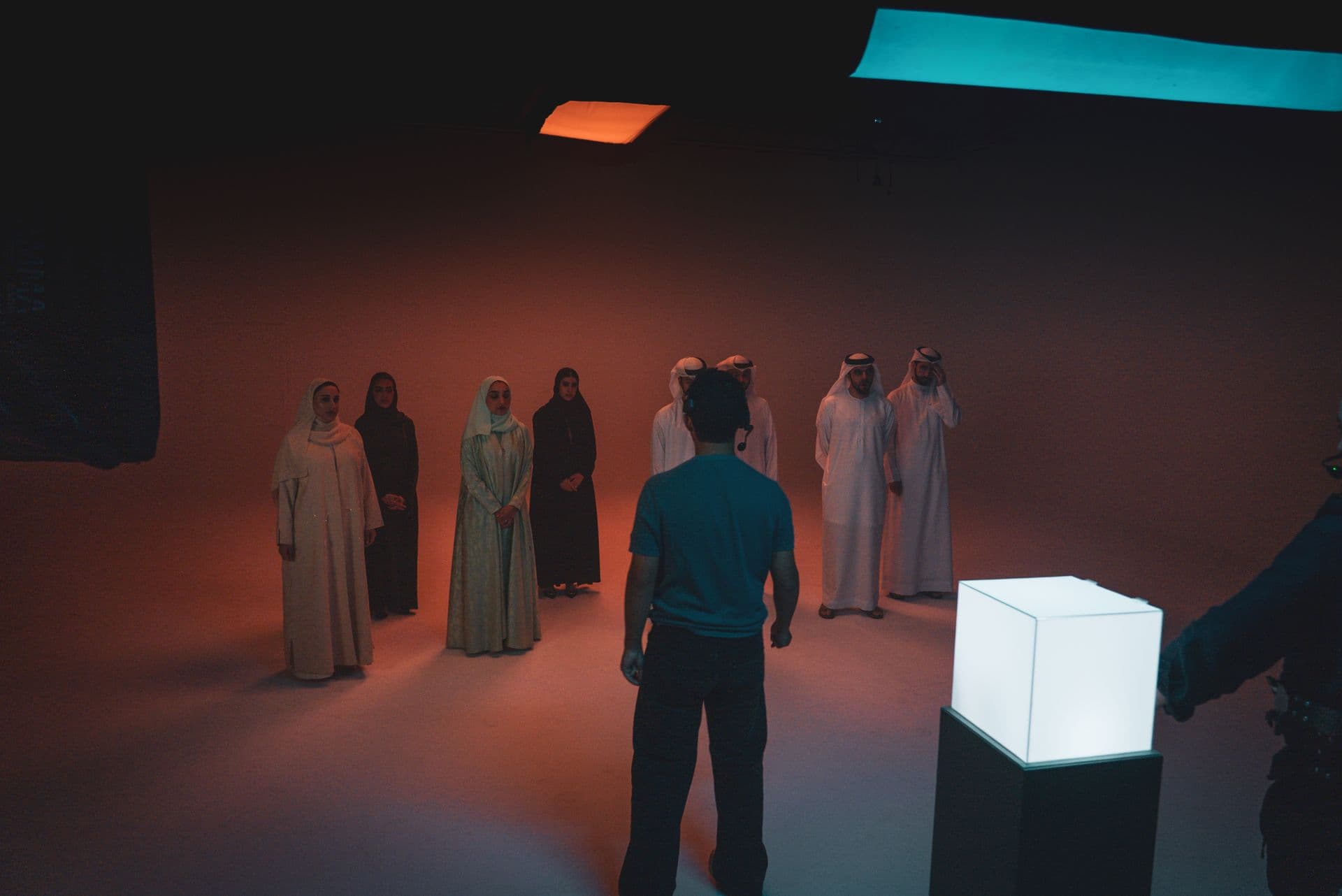
Format is where a company's thinking becomes visible. Our Pledge Day tribute, made for Union Pledge Day on 18 July, was shot 100% on film, with no digitalization. Film is not right for every project. The point is that format should be a decision, made for the occasion, rather than a habit.
Ask each finalist what format it would choose for your film, and why. Listen for reasons rooted in the subject, the audience and the film's life after its premiere.
For heritage nominations, format and editorial choices carry specific requirements. A UNESCO Intangible Cultural Heritage nomination file must include ten photos and a video, so the film is a required part of the file, not an optional add-on. UNESCO guidance says the video should represent the element in its current state, its role within its community, its transmission and any challenges, and recommends subtitling in English or French rather than dubbing. A finalist who pitches a glossy promotional piece, or proposes dubbing, has misread the brief.
What to Ask in the First Meeting
The first meeting should separate a real documentary methodology from generic video production. Questions about process reveal more than questions about equipment. For institutional buyers, our guide to evaluating a documentary company for government projects goes further into procurement and approvals.
Questions About Process
- Walk us through your stages from first meeting to final delivery. What does each stage produce?
- Who leads the research, and which sources do they draw on: archives, oral histories, academic work, community interviews?
- How do you verify cultural and historical details, and who signs them off?
- How do you handle script approval and filming permits? Filming permits must specify the purpose of filming, the schedule and the locations, so the answer should be specific.
- How do you source, clear and label archival material?
- At which stages do our stakeholders review the work?
Questions About the Finished Film
- Which formats and versions will you deliver, and for which uses: broadcast, events, archives, digital?
- How will you handle languages and subtitles?
- What happens to the research files, rushes and archive material after delivery?
- Can the film serve beyond its first occasion, as an archival record, an educational resource or part of a nomination file?
- Who holds the rights to the footage and the research?
Red Flags That Should Narrow the List Quickly
Some candidates eliminate themselves. These signs are worth acting on early.
When a Company Leads With 'Content' Rather Than Story
Listen to the vocabulary. A company that talks about "content," "assets" and "deliverables" before it has asked about your subject is thinking about output, not meaning. The same applies to package pricing per minute of footage, offered before anyone has discussed what the film needs to say.
Generic video production treats every subject the same way. A cultural film starts with a question: what does this tradition, this date, this institution mean, and to whom?
When There Is No Research Stage at All
Read the proposed timeline closely. If it runs from kickoff straight to shoot day, research is either missing or happening on set. Neither works for heritage.
Other warning signs:
- No named researcher or writer on the team.
- No clear answer on permits or script approval.
- Reluctance to share references from past institutional clients.
- A portfolio made almost entirely of advertising.
- A script that will be "found in the edit."
A Shortlist Checklist You Can Use Today
Use this list to move from a long list to three or four names, then to a proposal request.
Before You Contact Anyone
- Define the film's purpose, audience and occasion in a single paragraph.
- Note any fixed dates from the national or institutional calendar.
- Confirm whether your organization's procurement rules apply. Federal agencies must run formal supplier prequalification for mega, strategic, complex or high-cost projects, assessing financial solvency, technical capability, expertise and comparable past projects.
- Check each candidate's licence status and institutional portfolio.
- Cut the list to three or four.
Before You Ask for a Proposal
- Hold one meeting with each finalist, using the questions above.
- Request a research or scripting sample from a past project.
- Call at least one institutional reference per finalist.
- Fill in the comparison table and score each factor.
- Watch the reels last, and judge tone against your subject.
- Prepare a clear brief. Our guide on how to brief a documentary production company covers what to include.
Frequently asked questions
How many companies should be on a documentary shortlist?
Three or four is the right number for a cultural or institutional film. That leaves room for a real comparison while still giving each company a proper meeting, a research sample review and a reference call. A longer list usually means less attention for each candidate.
What's the difference between a documentary production company and a general video agency?
A documentary production company builds the film around research and story, with a defined stage for sources, archives and scripting before anything is shot. A general video agency is usually built around output and turnaround. For heritage and national subjects, that research stage is what protects accuracy.
How long does the shortlisting process usually take for an institutional film?
It depends on your organization's procurement rules. Across UAE government and semi-government portals, supplier pre-registration and prequalification typically takes 4 to 8 weeks before an entity can be invited to bid. Build that into your schedule, especially when the film is tied to a fixed national date.
Should we ask for a full proposal before we shortlist, or after?
After. Use credentials, a first meeting and a research sample to reach your shortlist, then ask the finalists for full proposals against a clear brief. Asking ten companies for full proposals wastes their time and yours, and makes proposals harder to compare.
Does a government or UNESCO-related project change how we should shortlist?
Yes. Government projects may require formal prequalification, and a prequalified supplier may be considered prequalified for similar procurements by the same agency within one year. UNESCO nomination films carry their own editorial requirements, so shortlist only companies that understand them and can show institutional work of similar weight.
If you are shortlisting companies for a national, institutional or heritage film, start a project with Sedrah Stories and we will walk you through our five-stage process.
Read next: Documentary Music Licensing: How to Clear Rights for Your Film